| |
| Thursday, 08 October 2026 |
| Treasures of the Silk Road: The Arts of Asia and Beyond
|
| Christopher Bradley |
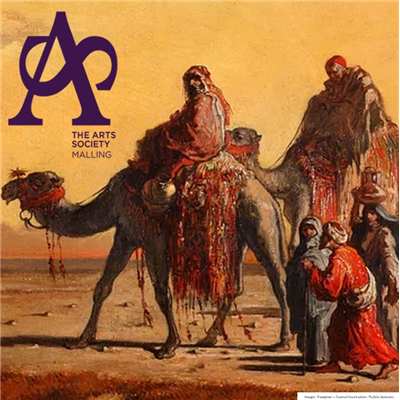 |
The Silk Road extends over 8,000 kms from China through Central Asia to the Mediterranean. The route acted as a highway for beliefs, ideas, inventions and art, whilst silk was just one of the many valuable commodities traded for 1,400 years. With the Greek invasion by Alexander the Great, early Persian routes spread east towards India. Chinese stability finally allowed the trade of silk, jade and ceramics in exchange for horses, pearls and gold. The wonderful paintings in the Magao caves at Dunhuang are evidence of the spread of Buddhism along the Silk Road. Samarkand and Bukhara are the beginning of the great Islamic buildings that continue through Persia and Syria Along the way we will see traditional murals, ceramics, statues, carpets, architecture, tile-work and of course silk itself. |
|
| Thursday, 12 November 2026 |
| Macaronis and Milordi: Clothing and Culture on the 18th Century Grand Tour |
| Jacqui Ansell |
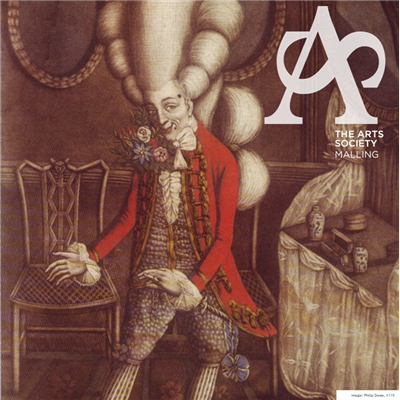 |
Travelling through mainland Europe on an extended ‘Grand Tour’ was the latest fashion amongst 18th century aristocrats. Many men (and some women) were lured by the thought of obtaining the latest fashions. Exquisite embroidery was cheaper in Paris, fine lace was bought in Flanders, and velvet in Italy. In Rome portraits were painted by Batoni for half the price of a Reynolds or Gainsborough. Gentlemen returning to London with new manners, dress and deportment were sometimes scorned as fops or ‘Macaronis’ (the ‘dandies of their day’). We will explore this phenomenon through contemporary paintings, letters, and satirical prints. |
|
| Thursday, 10 December 2026 |
| The History of The City of London as told through its stained glass
|
| Anna Warrillow |
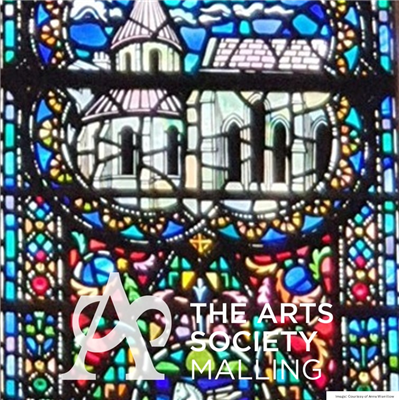 |
London's history is fascinating and full of colourful characters, from William Shakespeare to Dick Whittington's cat! In this lecture we gallop through almost 2000 years of London's history brilliantly illustrated through the stained-glass windows found in the city churches and livery halls. Often overlooked, these provide a unique insight into the milestones which have made up London's story. As well as18th, 19th century and 20th century windows we look at some of the most up-to-date and contemporary glass makers. |
|
| Thursday, 14 January 2027 |
| In the Footsteps of Wren: The architecture of Norman Foster and Richard Rogers |
| Brian Stater |
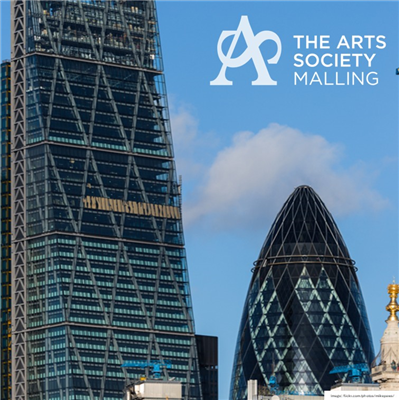 |
Richard Rogers and Norman Foster are the most celebrated British architects of the last 100 years, building around the world in steel, glass and concrete. When Rogers was awarded the Royal Gold Medal for Architecture the citation observed that he was “the rightful heir to the traditions of Wren”. And the same could certainly be said of Foster. The allusion to Wren is startling, but this lecture demonstrates that Wren might very well have recognised Foster and Rogers as kindred spirits. Wren transformed the London skyline, he had a restless and brilliantly inquisitive mind and believed that progressive design would enhance the function of his buildings. All of which (and much more) also applies to Foster and Rogers. |
|
| Thursday, 11 February 2027 |
| The “Incomparable” Empress Josephine: Collector, Gardener, Icon |
| Stephen Duffy |
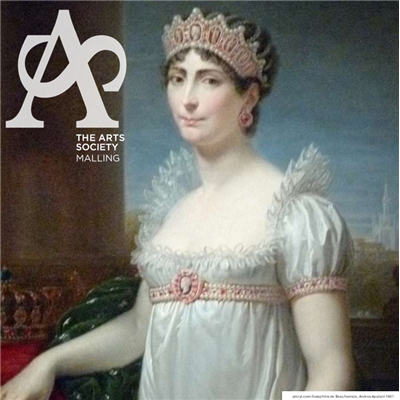 |
Napoleon’s Empress, Joséphine de Beauharnais, was a passionate gardener, patron and art collector. Her reputation for generosity, charm and gentleness of manner was of enormous value to Napoleon as a counterweight to the otherwise military and legalistic tenor of his regime. This talk will explain the range of her cultural activities, including her acquisition of a large and distinguished collection of paintings – among them by far the most important group of works by an entirely new school of painting, the troubadours (who painted beautifully crafted historical scenes.) We'll also look closely at Malmaison, her chateau near Paris, which she created as a home for her splendid art collection, and which was famous throughout Europe for its magnificent gardens containing plants and animals gathered from all over the known world. |
|
| Thursday, 11 March 2027 |
| Bottoms Up: The Story of Alcohol in Art
|
| Ian Swankie |
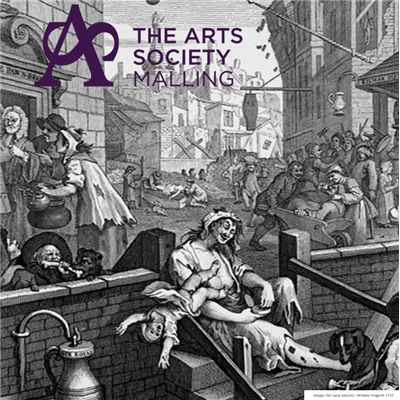 |
This is a talk about booze and intoxication in art. Since the early Romans and Greeks, alcohol has been an important subject for artists. We examine the way drink and drinking are depicted, the social messages portrayed, the happy and unhappy consequences, and how alcohol affected the lives of many artists, their families and friends. |
|
| Thursday, 08 April 2027 |
| Scandinavian Modern: Behind the Scenes
|
| James Vaux |
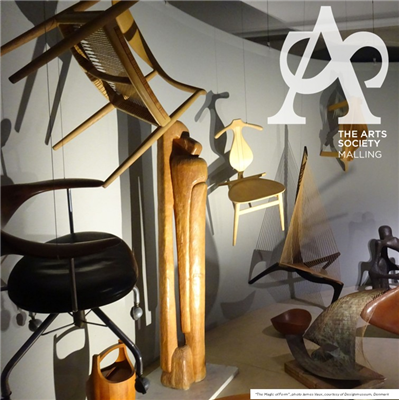 |
Just why did Scandinavian Modern design become so popular internationally in the mid-century? And what lay beneath the surface? Because its roots can be found in an extraordinary Nordic political project to change consumer taste and shape the model citizen, through scientific experimentation and social engineering.
This lecture concentrates on the height of Scandinavian Modern design between the 1930s and the 1960s. It charts how the Nordics broke away from Bauhaus and International Style to create softer, more organic furniture and graceful ceramics, glassware and textiles. The talk also looks at three ground-breaking exhibitions to show how Scandinavian Modern eventually turned from a functionalist movement into a luxury style, conquering the United States. It also examines its current revival and legacy, and asks whether everything in IKEA is really Scandinavian Modern… |
|
| Thursday, 13 May 2027 |
| Brave New World: How Arts and Culture Shaped Post War Britain |
| Russell Nash |
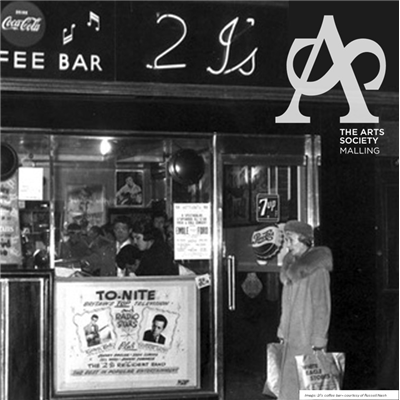 |
In the aftermath of World War II art, architecture, fashion, film, music and theatre changed radically. Through the Abercrombie plan to remake London and create new towns, architects remade cities in modernist, brutalist ways. Angry young men and new forms of musical theatre emerged. In Soho, rock’n’roll was born and artists flocked to the Colony Rooms. After the gentle Ealing comedies came social realism. The Festival of Britain highlighted the artistic communities and showcased a brighter future for every citizen. In fine art, Hepworth and Heron, Bacon and others were forging bold new directions. This lecture will take you from the end of WWII to the dawn of the Swinging Sixties. Unburdened by the expectations of the past, the new Elizabethan age was one of unlimited possibilities. |
|
| Thursday, 10 June 2027 |
| Hollywood and The Hays Code, 1934-1968
|
| Christopher Budd |
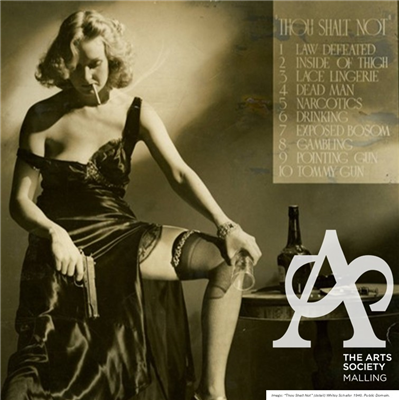 |
For more than three decades during the golden age of Hollywood, the content of American movies was subject to Will H Hays’ Motion Picture Production Code, a strict set of rules that stipulated what could – and more importantly what couldn’t – be portrayed on screen. How did the code come about? Who made the rules? Who pushed back against them? And what brought about its demise? |
|